The 50/30/20 rule is the most quoted budgeting advice on the internet: 50% of your income to needs, 30% to wants, 20% to savings. It is simple, memorable — and it was written for an American middle-class household in 2005.
For most South African professionals, the maths does not survive contact with reality. Between transport costs, black tax, and debt repayments that arrive before you have even had coffee on the 25th, "needs" routinely swallow 65% or more of a salary.
Start with what the rule gets right
The core idea is worth keeping: give every rand a job before the month starts. The exact percentages matter less than the discipline of splitting your income into buckets on purpose, instead of discovering where it went afterwards.
The Khaya version: Survival / Debt / Future
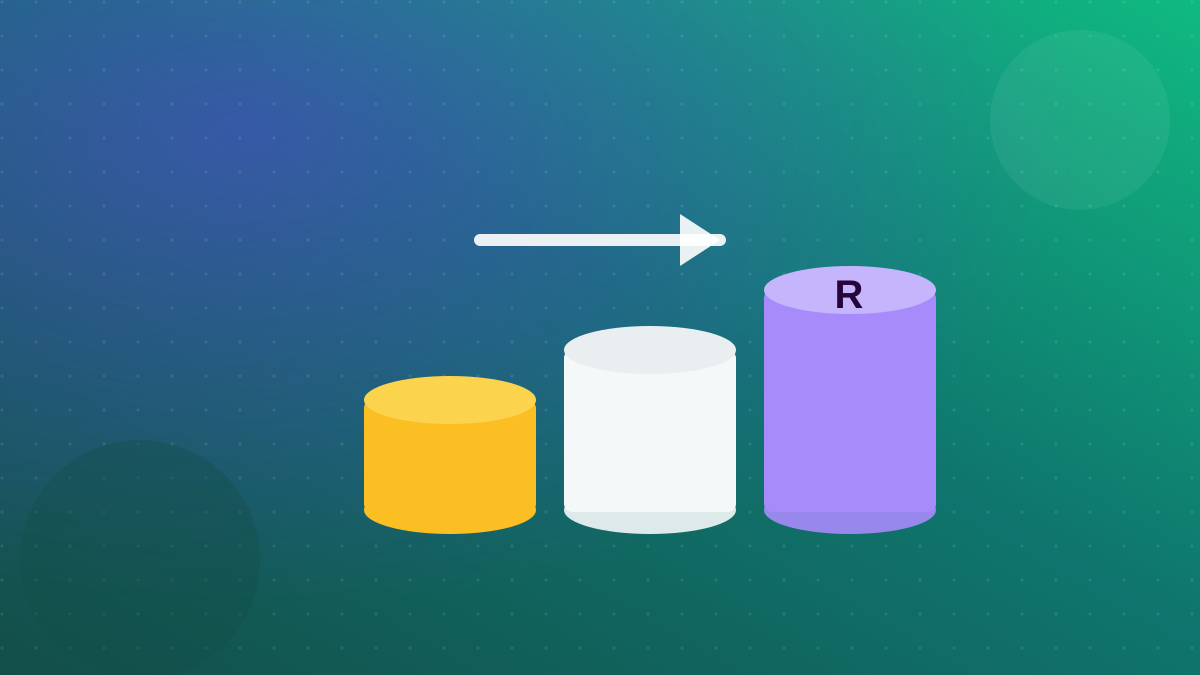
Instead of needs, wants, and savings, we suggest three buckets that match how money actually moves here:
- Survival — rent or bond, groceries, transport, airtime and data, school fees, the family members who count on you. This is not "50%", it is whatever it honestly is. Measure it first.
- Debt — every minimum payment, plus one attack payment on your most expensive debt. Credit cards and personal loans at 20%+ interest are emergencies, not furniture.
- Future — emergency fund first, then TFSA, then retirement annuity. Even R250 a month counts. The habit matters more than the amount at the start.
Black tax is a line item, not a leak
The biggest budgeting mistake we see is treating family support as an unpredictable surprise every month. It is not a surprise — it is a standing commitment, and it deserves a named line in your Survival bucket. When it has a number, you can plan around it. When it does not, it quietly eats your Future bucket every single month.
Run the ratio once a quarter
Add up three months of spending and work out your real Survival/Debt/Future split. Do not judge it — just know it. A 70/20/10 split with a plan beats a fantasy 50/30/20 you abandon by February.
The goal is not a perfect ratio. The goal is that on the 25th, your money already knows where it is going.
Track it automatically and Khaya will do the maths for you — every transaction sorted into Survival, Debt, and Future the moment it happens.